
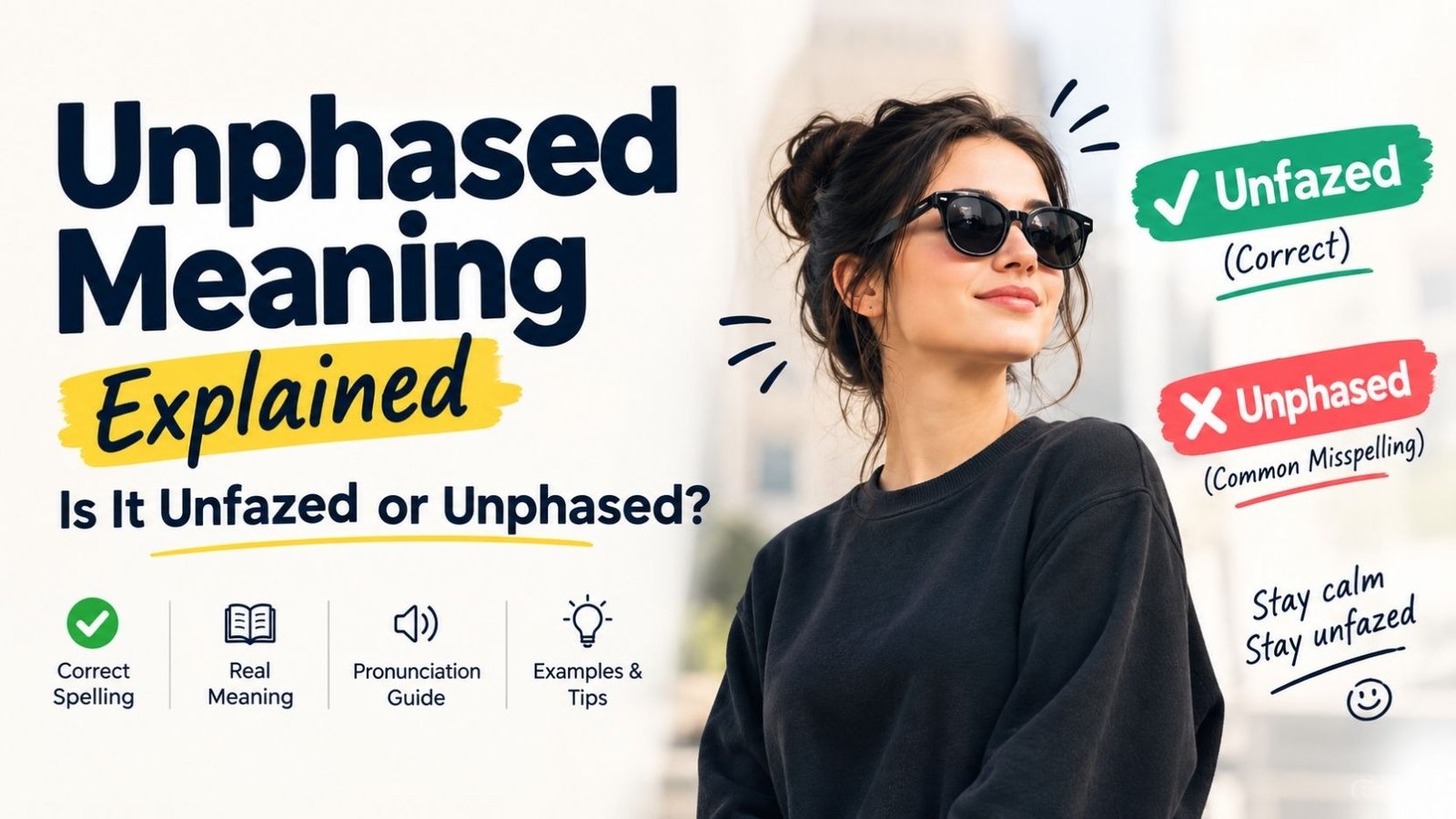
Many people search for “unphased meaning” without realizing the standard spelling is actually “unfazed.” If you have ever typed this word into a search bar wondering whether it was spelled right, you are not alone. This article explains the true meaning, the correct spelling, and how to use the word naturally in everyday English.
Unfazed means not bothered, shocked, or disturbed by something unexpected or stressful. It describes someone who stays calm even when a situation would normally cause worry or surprise. Understanding this small spelling difference matters because it affects how your writing looks in formal settings.
Unfazed or Unphased Meaning: Which Spelling Is Correct?
This is the question most people actually want answered. The two spellings are not equal in standard English.
- Unfazed is the correct and dictionary-recognized spelling.
- Unphased is a common misspelling based on the word “phase.”
The confusion happens because “phase” is a much more familiar word than “faze.” Since both words sound identical when spoken, writers often assume the spelling with “ph” is correct. It is not, at least not in standard usage.
| Spelling | Status | Example |
| Unfazed | Correct, standard English | She stayed unfazed during the interview. |
| Unphased | Common misspelling | Incorrectly written instead of unfazed |
See More: Pricey Meaning
What Does Unfazed Actually Mean?
At its core, unfazed describes a calm, undisturbed reaction to something that could easily cause stress, fear, or surprise.
According to Merriam-Webster, unfazed means “not fazed” or “undaunted.” In simpler terms, it describes someone who does not lose their composure.
Dictionary.com adds a similar definition, describing someone “not dismayed or disconcerted; undaunted.”
So if someone says, “She was unfazed by the criticism,” it means the criticism did not upset her or shake her confidence.
Unbothered and Unphased Meaning: Are They the Same Thing?
People often search for “unbothered and unphased meaning” together because the two words feel closely related in everyday conversation.
- Unfazed focuses on not being shaken by something surprising, stressful, or intense.
- Unbothered focuses more broadly on not being annoyed or concerned by something at all.
The overlap is real, but the emotional flavor is slightly different. Unfazed often implies that a situation had the potential to cause a reaction, but the person handled it with calm confidence. Unbothered can apply even when nothing dramatic is happening. Someone can be unbothered by small daily annoyances without ever being tested the way “unfazed” implies.
Grammar: What Part of Speech Is Unfazed?
Unfazed is an adjective. It describes a noun or pronoun, usually a person, and explains their emotional state or reaction.
Common sentence patterns include:
- be unfazed — She remained unfazed by the news.
- seem unfazed — He seemed unfazed after the accident.
- look unfazed — The dog looked completely unfazed by the fireworks.
It is almost always followed by the word “by” when explaining the cause of a possible reaction, such as “unfazed by criticism” or “unfazed by pressure.”
How to Pronounce Unfazed?
Unfazed is pronounced un-FAYZD, with the stress on the second syllable.
In IPA, it appears as /ʌnˈfeɪzd/. This pronunciation applies consistently across American and British English, since the spelling and sound of this word do not typically shift by region the way some vocabulary does.
Where Does Unfazed Come From?
The word unfazed comes from combining the prefix “un-,” meaning “not,” with “fazed,” the past form of the verb “faze.”
The verb “faze” itself has an interesting history. It comes from an older dialect word, “feeze,” which meant to frighten, disturb, or drive away. This earlier form traces back to Old English roots connected to chasing something off or putting something to flight. Over time, “faze” settled into its modern meaning: to disturb someone’s composure or confidence.
Once “faze” became established in American English, adding the negative prefix created “unfazed,” describing the opposite state, a person who is not disturbed at all.
Using Unfazed in a Sentence
Here are a few natural examples showing how the word fits into everyday writing and speech:
- Even after losing the first round, she remained unfazed and kept playing with confidence.
- The manager was unfazed by the sudden change in schedule.
- He looked completely unfazed, as if nothing unusual had happened at all.
These examples show the word working smoothly in personal, professional, and narrative contexts.
Common Mistakes When Using This Word
Because the sound of the word can be misleading, a few mistakes come up often.
❌ Incorrect: She was unphased by the results.
✅ Correct: She was unfazed by the results.
❌ Incorrect: He seemed unfazed with the criticism.
✅ Correct: He seemed unfazed by the criticism.
The second mistake happens because writers sometimes pair “unfazed” with “with” instead of “by.” Standard usage almost always calls for “by” when introducing the cause.
Synonyms and Related Words
If you want to vary your vocabulary while keeping the same idea, several close synonyms work well depending on tone.
| Word | Meaning | Best Use |
| Unperturbed | Calm and undisturbed | Slightly more formal tone |
| Unruffled | Composed, especially under pressure | Good for describing outward behavior |
| Undaunted | Not discouraged despite difficulty | Works well for challenges or setbacks |
| Unflappable | Rarely or never rattled | Suggests a consistent personality trait |
Each of these words shares the core idea of remaining calm, but the emotional shading shifts slightly depending on the situation you are describing.
Unphased Meaning In Slang
Since “unphased” is technically a misspelling, it does not carry a separate slang meaning of its own. When people search for “unphased meaning slang,” they are usually looking for confirmation that the word simply means calm, unaffected, or unbothered in casual conversation, which lines up with the standard meaning of “unfazed.”
In informal writing, especially on social media, you will still see “unphased” used often. It has not become a separate accepted word, but its widespread use shows how common the misspelling has become in everyday English.
See more: Swore Meaning
Frequently Asked Questions
What does unphased mean?
Unphased is a common misspelling of unfazed, which means calm and unaffected by something stressful or surprising.
Is it unfazed or unphased?
Unfazed is the correct spelling in standard English. Unphased is not recognized in major dictionaries.
What does unfazed mean in a sentence?
It means someone stayed calm and confident, even when a situation could have caused worry or surprise.
Is unfazed a noun or an adjective?
Unfazed is an adjective. It describes a person’s emotional reaction or state.
How do you pronounce unfazed?
It is pronounced un-FAYZD, with stress on the second syllable.
Where does the word faze come from?
Faze comes from an older dialect word, feeze, meaning to frighten or disturb, which traces back to Old English roots.
What is a simple synonym for unfazed?
Calm, unbothered, or unshaken all capture a similar meaning in everyday language.
Why do so many people spell it unphased?
Because “phase” is a far more familiar word than “faze,” writers naturally assume the “ph” spelling is correct, even though it is not standard.
Final Thoughts
The correct word is unfazed, not unphased, even though the second version is one of the most searched misspellings in English. Unfazed describes a calm, steady reaction to something that could easily cause stress or surprise, and it works naturally in personal stories, professional writing, and everyday conversation.
If you remember one thing from this article, let it be this: the word connects to “faze,” not “phase.” Once that distinction clicks, spelling it correctly becomes second nature, and your writing will read as more polished and accurate every time you use it.

Hira Shah is a passionate writer and the author behind Meanz Corner. With 4 years of experience in researching words, meanings, slang, phrases, and names, she creates simple and helpful content for readers. Her goal is to make complex meanings easier to understand through clear, accurate, and reader-friendly explanations.



2 Comments